
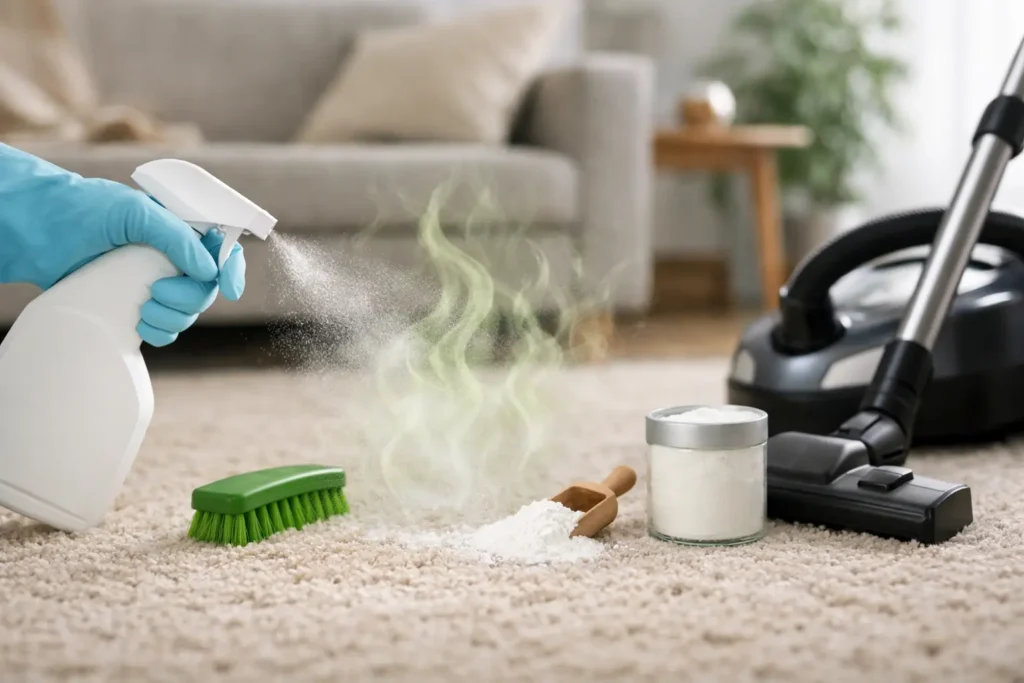
That sour, musty, or pet-related smell is rarely just sitting on top of the carpet. Odors settle into carpet fibers, padding, and sometimes the floor beneath them. Knowing how to eliminate carpet odors means finding the source instead of covering it with fragrance. A clean-smelling home should feel comfortable to live in, especially when your family, guests, or pets spend so much time indoors.
Start by Finding What Is Causing the Odor
Carpet odors have different causes, and the right treatment depends on what created the smell. A damp, basement-like odor can point to moisture. A sharp ammonia smell often signals old pet urine. Food spills, smoke, sweaty shoes, and everyday foot traffic can leave behind oils and bacteria that build up slowly.
Walk through the room and notice where the smell is strongest. Get close to the carpet in those areas rather than judging the room as a whole. If the odor seems concentrated around a pet’s favorite spot, a couch, a doorway, or a child’s play area, that detail can save you from cleaning the entire room without treating the real problem.
For pet accidents that are not easy to see, a black light may reveal dried urine spots. This is particularly helpful for renters and pet owners who notice an odor after the carpet looks clean. Visible stains are only part of the issue. Urine can travel below the surface, and a surface spray alone may not reach it.
Vacuum First, Then Treat the Carpet
Before using any odor treatment, vacuum thoroughly. Dust, pet hair, dander, crumbs, and loose soil hold odors and make cleaning products less effective. Move lightweight furniture when possible, and pay close attention to edges, corners, and the paths people use most often.
Use slow, overlapping passes instead of rushing through the room. A quick vacuum may pick up surface debris, but a slower pass gives the machine time to lift embedded hair and dirt from the pile. If your vacuum has a filter, empty or clean it according to the manufacturer’s instructions. A dirty vacuum can send odors right back into the room.
Once the carpet is free of loose debris, choose a treatment based on the odor source. This is where many well-meaning cleaning attempts go wrong. One product does not solve every odor, and adding too much moisture can make a bad smell worse.
For Everyday Stale or Light Odors
Baking soda can help absorb mild odors from ordinary use. Sprinkle a light, even layer over dry carpet, let it sit for several hours or overnight, then vacuum it up completely. Keep pets and children out of the area while it sits.
Baking soda works best for a carpet that is generally clean but has started to smell a little stale. It will not fully remove odors caused by urine, mold, deep spills, or heavily soiled carpet. Think of it as a refresh, not a deep-cleaning replacement.
For Pet Urine Odors
Use an enzyme-based cleaner made for pet accidents. Enzymes are designed to break down the organic material that causes the odor. Follow the label directions closely, since many products need time to remain damp and work properly.
Do not use steam or very hot water on a urine spot before it has been treated. Heat can set the odor and stain, making them more difficult to remove. Avoid mixing products too. Combining cleaners can reduce their effectiveness and may create unwanted fumes.
If the accident soaked through the carpet, the padding may also need treatment. This is why an old pet odor can return on humid days or after a basic shampooing. Moisture reactivates odor-causing residue that was never fully removed below the fibers.
For Food, Drink, and Organic Spills
Blot fresh spills right away with a clean white towel. Press down firmly to absorb moisture, but do not scrub. Scrubbing pushes the spill deeper and can spread it across more carpet fibers.
For older food or drink odors, use a carpet-safe spot cleaner and test it first in an out-of-the-way area. Even if the stain is gone, sugary drinks, milk, sauce, or grease can leave residue that attracts dirt and produces a lingering smell. A deeper extraction may be needed if the spill reached the padding.
Do Not Over-Wet the Carpet
One of the most common reasons carpets develop a musty smell is too much water during DIY cleaning. Rental machines and home carpet cleaners can be useful, but only when used carefully. If the carpet stays wet too long, moisture can settle into the backing or padding and create conditions for mildew.
Use the recommended amount of cleaning solution. Make extra dry passes with the machine after washing, and open windows or use fans to improve airflow. In humid New Jersey weather, drying can take longer than expected, so plan carpet cleaning for a time when the room can stay open and well ventilated.
A properly cleaned carpet should usually feel dry within several hours, though thicker carpet and humid conditions can extend that time. If it remains damp into the next day, increase air circulation immediately. If you notice a musty odor after cleaning, do not cover it with deodorizer. The carpet may need professional extraction and drying support.
Clean the Things That Transfer Odors Back to the Carpet
Sometimes the carpet is not the only source. Pet beds, area rugs, upholstered furniture, curtains, shoes, and HVAC filters can all hold onto smells and make a freshly cleaned carpet seem dirty again.
Wash or replace washable pet bedding, clean litter box areas regularly, and wipe the bottoms of shoes used outdoors. If odor is strongest near furniture, inspect the upholstery as well. Fabric furniture can collect pet dander, body oils, food particles, and dust that affect the entire room’s air quality.
This matters for more than a pleasant smell. When dust, dander, and other residue build up in soft surfaces, they can contribute to irritation for people with allergies or sensitivities. Cleaning carpets alongside rugs and upholstery helps create a more comfortable indoor environment instead of treating one surface in isolation.
When Home Remedies Are Not Enough
A professional carpet cleaning is often the better option when odors return after repeated treatment, when the carpet has widespread pet contamination, or when there has been a large spill, water issue, or smoke exposure. The goal is not simply to make the room smell fresh for a day. It is to remove the soil and odor-causing material trapped deep in the carpet.
Professional equipment can provide stronger extraction than many household machines, helping remove embedded dirt, allergens, cleaning residue, and moisture. The right method depends on carpet type, its condition, and the source of the odor. Delicate fibers, older carpets, and heavily stained areas need a careful approach to avoid damage or over-wetting.
For households with pets, young children, frequent visitors, or allergy concerns, routine deep cleaning can make a noticeable difference in how the home feels. It also helps protect the look and life of the carpet. At Olmos Cleaning, carpet and fabric cleaning are treated as part of a healthier, more enjoyable space, not another housework project taking up your weekend.
How to Keep Carpet Odors From Coming Back
The simplest prevention habit is responding quickly to spills and accidents. The longer moisture and residue remain in carpet, the more likely they are to settle below the surface. Blot, treat the source, and make sure the area dries completely.
Vacuum regularly, especially in entryways, living rooms, bedrooms with pets, and areas where children eat or play. Use doormats to reduce tracked-in moisture and dirt, and avoid leaving wet shoes, towels, or pet items on carpet. If a room feels humid or has had a leak, address the moisture problem before focusing on fragrance.
A good-smelling carpet is not supposed to smell heavily perfumed. It should simply smell clean, dry, and comfortable. When an odor keeps returning, that is your home telling you there is more beneath the surface. Give yourself back the time and peace of mind to enjoy your space, and get a free estimate when the job calls for a deeper clean.