
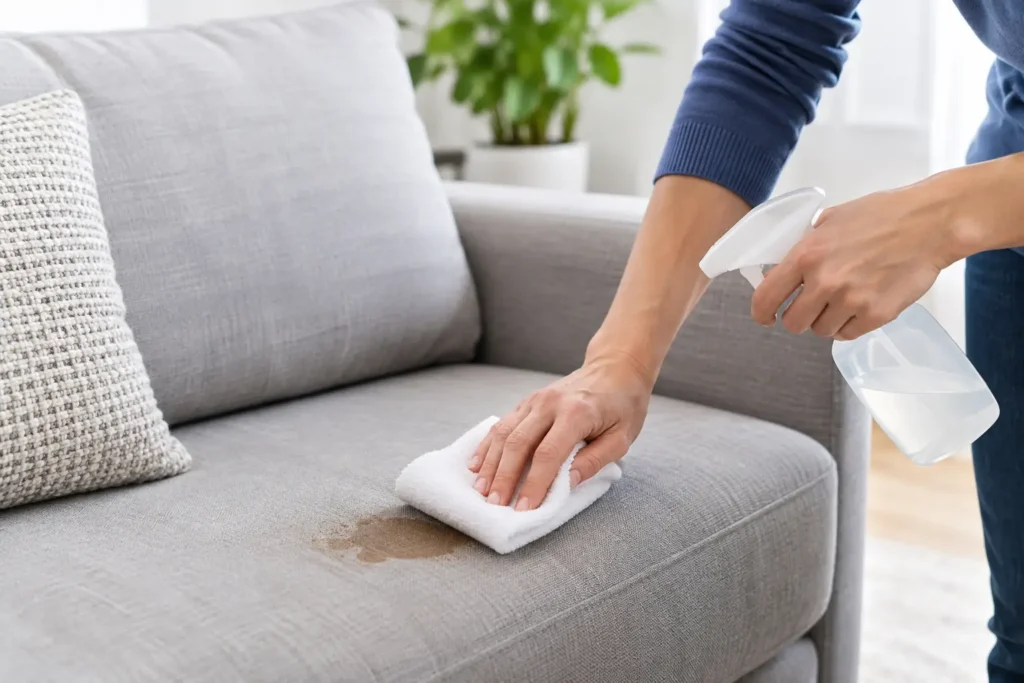
A spill on the sofa can turn a relaxing evening into a stressful cleanup job in seconds. The good news is that effective sofa stain removal usually starts with a calm first response, not aggressive scrubbing. Whether it is coffee before work, juice from the kids, muddy paw prints, or a pet accident, the way you treat the fabric in the first few minutes can make a real difference.
Your sofa is more than a piece of furniture. It is where your family sits, rests, eats, gathers, and sometimes falls asleep. Keeping upholstery clean helps your home look cared for, but it can also reduce lingering odors, dust, allergens, and the grime that settles deep below the surface.
Start Sofa Stain Removal by Identifying the Fabric
Before applying water, soap, or a store-bought cleaner, check the manufacturer tag under the cushions or on the frame. Upholstery cleaning codes tell you what the fabric can handle. A W code generally allows water-based cleaning products. An S code calls for a solvent-based cleaner. WS means either may be appropriate, while X means vacuuming or professional cleaning only.
This small step matters. Water can leave rings on some fabrics, cause colors to bleed, or push oily stains deeper into the fibers. Delicate materials such as velvet, silk, wool, linen blends, and certain microfiber finishes need particular care. If the tag is missing, test any method in a hidden spot first, such as behind a cushion or along the lower back of the sofa.
Avoid the temptation to use dish soap, baking soda, vinegar, and several sprays all at once. Mixing products can leave residue, alter fabric color, or create a stain that is harder to remove than the original spill.
The First Five Minutes Matter Most
For fresh spills, blotting is the priority. Use a clean white cloth or plain paper towel and press it gently into the affected area. Work from the outer edge toward the center so the stain does not spread. Keep switching to a dry section of the cloth as it absorbs moisture.
Do not rub back and forth. Rubbing can fray upholstery fibers and force liquid farther into the padding, where it may create a sour smell or reappear as the sofa dries. That is especially common with large drink spills and pet accidents.
If the spill contains solids, such as food or mud, lift away as much as you can with a spoon or dull edge before blotting. Scraping with a sharp tool can snag the material or spread grease across a wider area.
Treat the Stain Based on What Caused It
A single cleaning method does not fit every stain. Protein-based messes, oily foods, dyes, and everyday dirt react differently. Once you have checked the upholstery code, use the gentlest appropriate approach.
Coffee, Tea, and Juice
Blot immediately, then use a lightly damp cloth with a small amount of upholstery-safe water-based cleaner if your sofa permits it. Blot again with clean water to remove cleaner residue, then press dry towels over the area. Sugary drinks can leave a sticky film that attracts more dirt, so a light rinse is often just as necessary as the initial treatment.
Grease, Makeup, and Body Oils
Oil-based stains need to be lifted rather than soaked. First, blot away any excess. If the care code permits, apply an upholstery-safe solvent cleaner to a cloth, not directly to the sofa, and dab gently. Too much liquid can create a larger ring or affect the backing beneath the fabric.
These stains are often more visible on armrests, headrests, and favorite seats because oils from skin and hair build up gradually. What looks like a dark patch may be more than a single stain and may require a deeper upholstery treatment.
Pet Accidents and Odors
Absorb as much moisture as possible right away. For sofas that allow water-based cleaning, use a fabric-safe enzyme cleaner made for pet stains. Enzymes help break down the organic material that causes odors instead of simply covering the smell with fragrance.
Do not oversaturate the cushion. If moisture reaches the foam and does not dry thoroughly, odors may return. Pet urine can also spread well beyond the visible spot, particularly on light-colored upholstery.
Ink, Dye, and Nail Polish
These are high-risk stains. Ink and dye can spread quickly, while nail polish products may damage upholstery finishes or dissolve color. Blot without rubbing and avoid improvised remedies unless you know the fabric can tolerate them. A professional cleaner is often the safer choice when the stain is fresh and highly pigmented.
Mud and Everyday Dirt
Let wet mud dry completely before vacuuming or gently brushing away the loose soil. Treating wet mud with water too soon can turn it into a larger brown smear. Once the dry debris is removed, use the approved method for the fabric to address the remaining mark.
Drying Is Part of the Cleaning Process
A sofa may look clean while it is still damp below the surface. Good airflow helps prevent musty odors and water marks. Open windows when weather allows, run ceiling fans, or place a fan nearby without aiming intense heat directly at the fabric.
Avoid sitting on freshly cleaned cushions until they are fully dry. Pressure can push remaining moisture deeper into the foam and leave uneven marks. It may take several hours for upholstery to dry, depending on the fabric, room humidity, and how much moisture was used.
If you notice a ring after drying, resist the urge to soak only the center again. The ring often forms because moisture or cleaning solution dried unevenly. A professional can assess whether the area needs controlled, even cleaning rather than another round of spot treatment.
When DIY Sofa Stain Removal Is Not Enough
Some stains are worth handling yourself, especially when they are fresh, small, and on a fabric with clear cleaning instructions. But there is a point where repeated attempts cost more in fabric damage, lost time, and frustration than professional care.
Consider professional upholstery cleaning when a stain has set, the sofa has widespread discoloration, there is a persistent pet odor, cushions feel stiff from old cleaning residue, or the upholstery is delicate. Families with allergies may also benefit from deep cleaning because visible stains are only part of what collects in upholstered furniture. Dust, dander, crumbs, and skin particles settle into areas that ordinary vacuuming cannot fully reach.
Professional equipment uses controlled extraction to remove embedded soil while helping upholstery dry properly. The right treatment depends on the fiber type, the stain, the cushion construction, and prior cleaning attempts. That careful approach is especially valuable for sectionals, light fabrics, heirloom furniture, and sofas that see daily use.
At Olmos Cleaning, upholstery-focused deep cleaning is designed for the real-life messes New Jersey homes deal with, without asking you to spend your weekend fighting stains. A free estimate can help you understand the best next step for your sofa and its fabric.
Help Your Sofa Stay Cleaner Between Deep Cleanings
A little routine care makes sudden spills easier to manage. Vacuum the sofa regularly with an upholstery attachment, including under the cushions and along seams where dust and crumbs collect. Rotate and fluff loose cushions when possible so one seat does not absorb all the wear.
If your household includes children or pets, keep clean white cloths and an upholstery-safe cleaner on hand before an accident happens. Consider washable throws in the most-used areas, especially on light-colored furniture. They are not a replacement for cleaning, but they can reduce how often spills reach the upholstery itself.
Your free time was not made for chasing old stains across the living room. Treat fresh spills gently, respect the fabric’s cleaning code, and get help before a small spot becomes a permanent part of the sofa.