
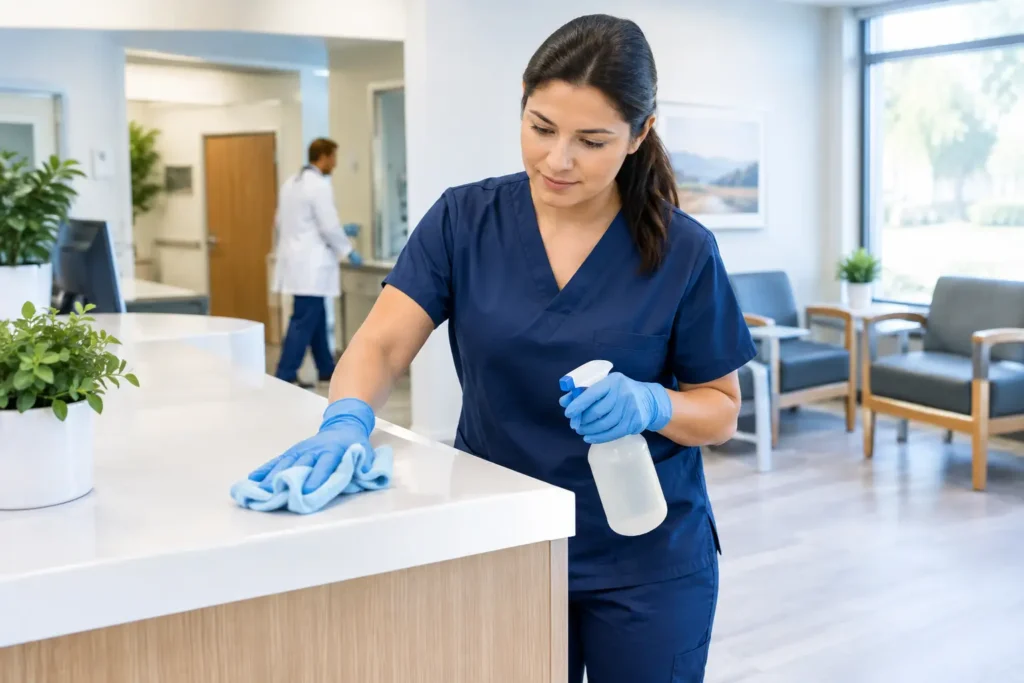
A patient may not know whether the flooring was cleaned before they arrived, but they notice the details: fingerprints on the check-in glass, crumbs under a waiting room chair, dust along a vent, or an odor in upholstered seating. Medical office cleaning is part of the experience patients carry with them before they ever meet the provider. A clean, calm space tells people their comfort is being taken seriously.
For New Jersey practices, clinics, dental offices, therapy centers, and wellness spaces, cleaning also has to work around real schedules. Patients come and go, staff members need clear work areas, and certain rooms may require specific protocols based on the services performed. The goal is not simply to make an office look presentable. It is to maintain a healthier, more welcoming environment without pulling your team away from patient care.
What Medical Office Cleaning Should Cover
Medical and health-related offices collect a different kind of daily buildup than many standard workplaces. High foot traffic brings in moisture, grit, and outdoor debris. Reception counters, door handles, clipboards, chairs, payment terminals, and restroom fixtures are touched throughout the day. Fabric chairs and carpet can hold dust, allergens, and odors that routine vacuuming may not fully remove.
A dependable cleaning plan addresses the visible mess and the surfaces people use most. That usually includes reception and waiting areas, offices, hallways, staff break areas, restrooms, floors, interior glass, and common touchpoints. The right scope depends on the size of the practice, the number of visitors, floor materials, and whether the facility has clinical areas with additional requirements.
It also helps to separate general environmental cleaning from clinical disinfection. A professional cleaning company can keep shared spaces, furnishings, and floors in good condition, but medical instruments, treatment equipment, and regulated biohazard materials require trained clinical staff and facility-specific procedures. Clear boundaries protect your patients, your team, and the cleaning crew.
Start With the Patient-Facing Areas
Reception is where patients form their first impression. Dusty baseboards, smudged entry doors, stained chairs, and overflowing trash bins make a space feel neglected, even when the care inside is excellent. Regular cleaning keeps the front of the office ready for the next appointment instead of waiting until the buildup becomes obvious.
Waiting room seating deserves special attention. Upholstered chairs, benches, and fabric partitions can collect dust, skin particles, pet dander carried in on clothing, and everyday odors. Spot cleaning may help for a fresh spill, but periodic upholstery deep cleaning removes the grime that settles below the surface. This is especially valuable in offices serving children, families, seniors, or patients with allergy concerns.
Floors matter just as much. Entryways and corridors take the most abuse during wet weather and busy appointment blocks. Vacuuming and mopping on a consistent schedule help, while carpet cleaning can refresh heavily used areas and improve the overall feel of the office. For hard floors, the right products and methods depend on whether you have vinyl, tile, laminate, or another surface. Using the wrong approach can leave residue or damage the finish.
Cleaning Frequency Depends on Your Office
There is no single schedule that works for every medical office. A small counseling practice with a few appointments each day may need a different routine than a busy urgent care waiting room. The key is to match cleaning frequency to the amount of traffic and the spaces your patients use.
Many offices benefit from routine service for restrooms, trash, floors, waiting areas, and high-contact common surfaces. Then, schedule deeper work for carpets, rugs, upholstered furniture, vents, baseboards, and hard-to-reach buildup as needed. A one-time deep clean can be useful before opening a new office, after renovations, before an inspection, or when regular upkeep has fallen behind.
Pay attention to the signs that your current plan needs an adjustment. Lingering odors, dull carpet paths, stained seating, dusty corners, and complaints about restroom conditions are all signals that the office may need more than a quick after-hours tidy. If staff members are spending time wiping down common areas between tasks, it may be time to bring in consistent outside support.
Why Soft-Surface Cleaning Matters
Hard surfaces are easy to notice because a smudge or spill is visible right away. Soft surfaces can be easier to overlook. Carpets, rugs, mattresses in certain wellness settings, and upholstery hold onto particles that are not always visible from across the room.
Over time, that buildup can affect the appearance and smell of an office. It may also make a waiting room less comfortable for people sensitive to dust or allergens. Professional extraction and fabric-focused cleaning can help remove embedded dirt rather than only treating the top layer.
This is where a customized service makes a real difference. Not every chair fabric, rug, or carpet requires the same treatment. A good cleaning plan considers the material, the age and condition of the item, the type of staining, and the time available for drying. Faster is not always better if it leaves behind excess moisture or fails to address the cause of an odor.
Build a Cleaning Plan That Does Not Interrupt Care
The best cleaning schedule is one your office can actually maintain. For many practices, that means service before opening, after closing, or during lower-traffic hours. A cleaning crew should know which entrances to use, where supplies are stored, which spaces are off-limits, and who to contact if an issue comes up.
Before service begins, walk through the office and identify priorities. Maybe the reception area needs daily attention, while private offices need less frequent work. Perhaps your carpets look worn near the front desk but the rest of the building is in good shape. Specific instructions lead to better results than a vague request to “clean the office.”
It is also smart to identify surfaces or rooms that require special handling. Patient charts, computers, personal belongings, medications, sharps containers, and clinical supplies should never be treated as ordinary cleaning areas. Your staff can set the standards for restricted zones, while the cleaning team focuses on the agreed-upon environmental surfaces.
Questions to Ask Before Hiring a Cleaning Company
A professional cleaner should make it easy to understand what is included, how often service is recommended, and what the estimate covers. Ask whether the company has experience with commercial spaces, what cleaning methods are used for carpet and upholstery, and how they handle scheduling around business hours.
You should also ask how the team responds to special requests. A waiting room spill, a stained chair, a post-renovation dust problem, or a seasonal deep clean may call for more than your normal service. Flexibility matters because offices do not stay the same all year.
Price is part of the decision, but it should not be the only one. The lowest estimate may leave out detailed work that patients and staff notice later. A clear scope of service helps you compare options fairly and avoid surprises after the job is done.
A Cleaner Office Supports a Better Day
Your staff already has enough to manage. They should not have to spend their last few minutes of the day scrubbing restroom floors, trying to lift stains from reception chairs, or vacuuming a carpet that needs a deeper clean. Professional support gives your team more time to focus on patients and gives your office a more consistent standard from one day to the next.
Olmos Cleaning provides customized cleaning support for New Jersey businesses that want clean, comfortable spaces without adding more housework or upkeep to the day. Whether your office needs recurring attention, fabric and upholstery care, carpet cleaning, or a focused deep clean, starting with a free estimate makes it easier to plan around your needs.
A well-kept medical office does more than look polished. It gives patients one less thing to worry about when they walk through the door – and gives your team a space that feels ready for the work ahead.