
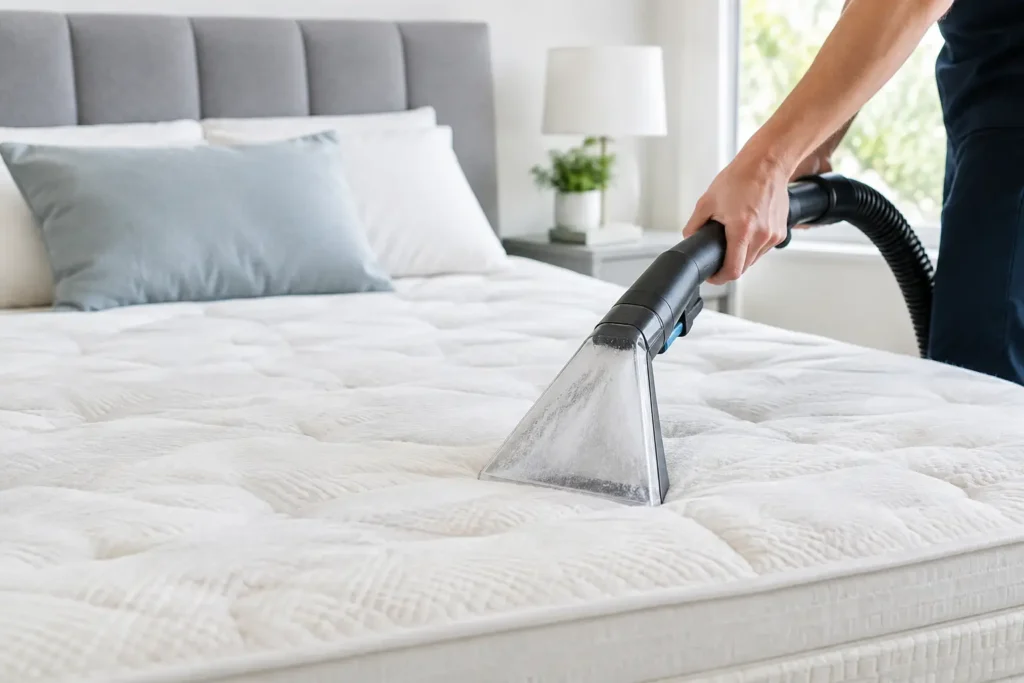
That faint odor, the mystery spot under the sheets, or waking up stuffy every morning can all be signs that your mattress needs more than fresh bedding. Mattress cleaning frequency is not the same for every home, but every mattress collects dust, body oils, dead skin cells, sweat, and allergens over time. A clean mattress supports a more comfortable place to rest, especially for families, pet owners, and anyone sensitive to dust.
You do not need to deep-clean your mattress every month. You do need a routine that matches the way your household actually lives. The goal is to keep buildup from settling in so your bed stays fresher, healthier, and more inviting between professional cleanings.
How Often Should You Clean a Mattress?
For most households, a mattress should be professionally deep-cleaned about once every 6 to 12 months. This is a practical baseline for removing the dirt and moisture that regular sheet washing cannot reach. Vacuuming the mattress surface and changing sheets regularly help, but they do not fully clean the upholstery layers below.
A six-month schedule makes sense for busy homes with children, pets, frequent allergies, or someone who sweats heavily at night. If your bedroom stays clean, you use a mattress protector, and no one has allergy concerns, an annual deep cleaning may be enough.
The mattress itself is only one part of the routine. Wash sheets and pillowcases weekly, wash blankets and comforters as their care labels allow, and clean or replace mattress protectors regularly. These habits reduce what reaches the mattress, which can make deep cleaning more effective and help protect your investment.
What Changes Your Mattress Cleaning Frequency?
There is no one schedule that fits every bed. The right timing depends on exposure, use, and whether the mattress has had a specific incident that needs attention.
Allergies and asthma
Dust mites and common household allergens can build up in soft surfaces, including mattresses. If someone in your home wakes with congestion, sneezing, itchy skin, or irritated eyes that seem worse in the bedroom, a more frequent mattress cleaning schedule may help reduce the irritants in their sleeping space.
Deep cleaning is not a replacement for medical care or allergy treatment, but it is one practical way to improve the condition of a high-contact surface. For allergy-prone households, consider professional service every 3 to 6 months, along with weekly bedding care and a washable encasement or mattress protector.
Pets in the bedroom
Even a clean, well-loved pet can bring dander, fur, outdoor dust, and occasional odors onto the bed. If your dog or cat sleeps with you, or often climbs onto the mattress during the day, plan on cleaning more often than an annual schedule. Every 6 months is usually a sensible starting point.
Pet accidents need faster action. Blot the area right away with a clean towel and avoid soaking the mattress. Excess water can travel deep into the padding and may leave an odor or create conditions for mildew. A targeted professional cleaning is often the better choice when urine, vomit, or a strong odor has reached the mattress.
Kids, spills, and life at home
Breakfast in bed, nighttime accidents, sick days, and spilled drinks happen. A stain does not always mean the mattress is ruined, but waiting too long can make it harder to remove. Treat fresh spills promptly, then schedule deep cleaning when the mattress needs odor treatment, stain attention, or a full refresh.
For a child’s mattress, cleaning every 6 months can be worthwhile even without a major spill. Children spend a lot of time on beds reading, playing, and relaxing, and those soft surfaces take on more than most parents realize.
Sweat, humidity, and everyday use
Mattresses absorb moisture over time. Night sweats, warm bedrooms, and humid New Jersey summers can all contribute to that lived-in smell many people notice before they can identify its source. If the mattress smells musty or no longer feels fresh after changing the sheets, it is time to move deep cleaning higher on your to-do list.
Letting the bed air out for a short time after waking can help. Pull back the comforter, allow moisture to dissipate, and keep bedroom airflow moving when possible. These small habits will not replace cleaning, but they can reduce moisture buildup between appointments.
Signs It Is Time for Mattress Cleaning Now
A calendar is useful, but your mattress may tell you it needs attention sooner. Noticeable odors, visible stains, increased allergy symptoms in the bedroom, pet hair that keeps returning, and a gritty or dusty feel on the surface are all good reasons to schedule a cleaning.
You should also consider service after an illness, a bedwetting incident, a pet accident, or an extended period of sleeping without a mattress protector. Moving into a new home is another smart time to clean a mattress, particularly if it has been stored, transported, or sitting in a dusty room during the move.
Do not rely on fragrance sprays to solve an odor problem. They may cover the smell temporarily, but they do not remove the source. The same goes for using too much baking soda or liquid cleaner. Some DIY methods leave residue behind, while oversaturating a mattress can create a much bigger problem than the original stain.
What You Can Do Between Deep Cleanings
A professional cleaning handles the deeper work, while simple maintenance helps keep your mattress in better shape. Strip the bed when you wash your sheets and use a vacuum with an upholstery attachment to remove loose dust and hair from the surface and seams. Work slowly, especially around piping and edges where debris can collect.
Use a quality mattress protector that fits securely and wash it according to the manufacturer’s instructions. A protector is especially useful for children, pets, and anyone who enjoys a snack or coffee in bed. It cannot stop every issue, but it creates a valuable barrier against moisture, oils, and minor spills.
Rotate your mattress if its manufacturer recommends it. Many modern mattresses should not be flipped, but rotating them from head to foot can support more even wear. Check the care guidance first, particularly for memory foam, hybrid, and pillow-top styles.
Keep the bedroom floor and nearby upholstery clean, too. Dust, pet hair, and allergens do not stay neatly in one place. When carpets, rugs, curtains, and upholstered furniture hold buildup, some of it can make its way back to the bed.
Why Professional Mattress Cleaning Is Worth It
A mattress is one of the most used upholstered surfaces in your home, yet it is easy to overlook because it stays covered. Professional mattress cleaning is designed to treat the fabric safely, lift embedded soil, address odors, and help refresh the place where you spend so much of your time.
The right method depends on the mattress material, its condition, and the issue being treated. A delicate mattress needs a different approach than a durable, heavily soiled one. This is where professional experience matters. Aggressive scrubbing, excessive heat, or too much moisture can damage materials or leave the mattress unable to dry properly.
For households that are already balancing work, errands, family schedules, and cleaning, outsourcing the deep work can make sense. You get a fresher sleeping surface without giving up a weekend to trial-and-error cleaning methods.
Build a Schedule That Fits Your Home
Think of mattress cleaning as preventive home care, not just a response to stains. Start with annual professional cleaning, then move to every 6 months if pets, children, allergies, heavy use, or noticeable odors are part of your routine. If a spill or accident happens, address it quickly instead of waiting for your next scheduled appointment.
A clean bed feels better at the end of a long day, and it helps create the comfortable home you work hard to maintain. When your mattress needs a deeper reset, Olmos Cleaning can handle the hard work while you make more room for rest.